


 GPro 100W
 GA 100W
 GM Pro 60W
 Reno 65W
 Reno 65W Pro
 Reno 45W

How to Master a 50W Fiber Laser MOPA for High-Contrast Color Marking and Deep Metal Engraving
8%
off
Hurry! Offer Ends Soon!
CODE: AUBLOG888
COPY
CODE
CODE
If you want proper colour on metal and deep, clean engraving, you need to understand how a fiber laser mopa really works. A standard marking setup can scratch the surface, sure, but a 50w fiber laser with MOPA control gives you way more range.
In Australia, more workshops are upgrading to fiber laser mopa systems because customers now expect sharp logos, bold serial numbers, and even colour finishes on stainless steel. When you dial in a 50w fiber laser correctly, it’s not just marking anymore, it’s precision metal work.
This guide breaks it down step by step, no fluff. Just practical info you can use straight away.
Understanding How a Fiber Laser MOPA Actually Works
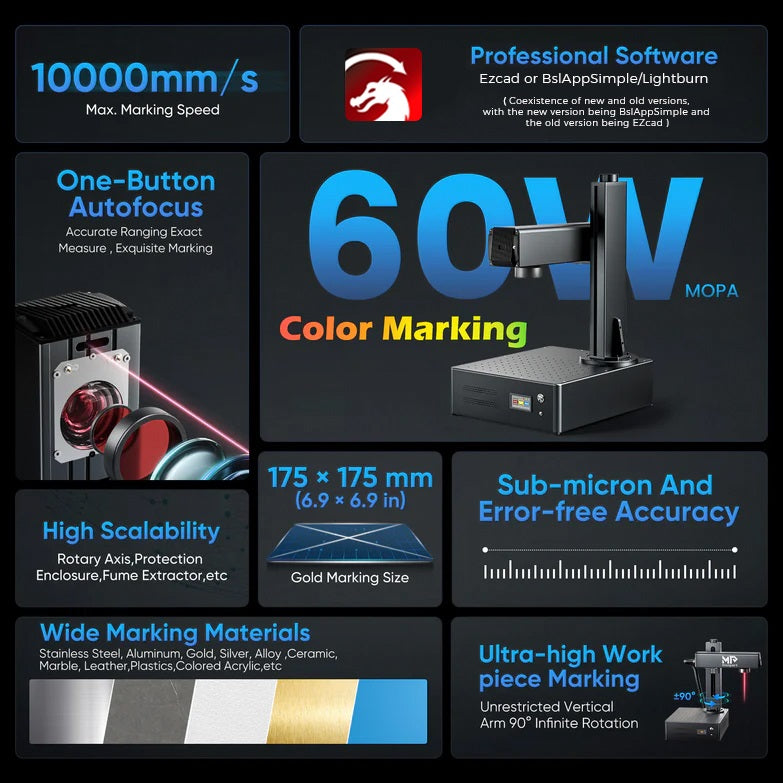
A fiber laser mopa is different from a standard fibre marker because it lets you adjust pulse width and frequency separately. That matters a lot.
With a basic 50w fiber laser, your pulse settings are more limited. You can mark metal, yes. But colour control and deep engraving options are not as flexible.
What Makes MOPA Different
Here’s what you control with a fiber laser mopa:
• Pulse width
• Frequency (often 1–3000 kHz)
• Peak power control
• Heat input per pulse
This means your 50w fiber laser can produce:
• High contrast black marks
• Stainless steel colour effects
• Deep, layered engraving
• Reduced burn marks
It’s about control. Less guesswork, more consistency.
If you’re still learning machine basics, see our laser engraver buying guide 2026 before choosing your setup.
Setting Up a 50W Fiber Laser for Best Results
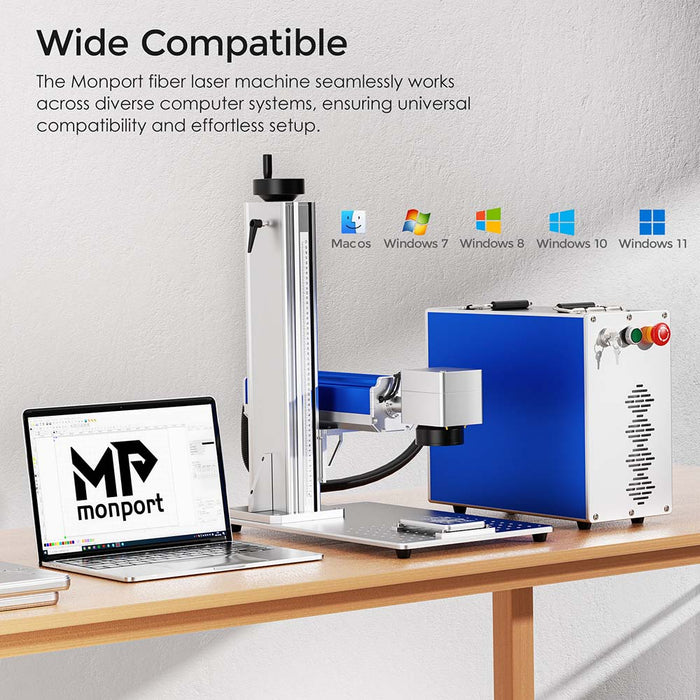
Before you start marking, setup matters more than most people think.
Focus Is Everything
With a fiber laser mopa, focus must be exact. Even 1mm off can reduce colour strength.
Manual focus works fine on many 50w fiber laser units, but auto-focus systems are faster and reduce human error.
Start With Test Grids
Never jump straight into a paid job.
Create a matrix test:
• Different frequencies
• Different pulse widths
• Different speeds
• Same power
Your fiber laser mopa will show you exactly which combo produces colour and which gives depth.
That’s how pros do it.
High-Contrast Colour Marking on Stainless Steel

This is where a fiber laser mopa shines.
Colour marking happens by controlling oxidation layers. You’re not adding ink. You’re changing how light reflects off the metal surface.
With a properly tuned 50w fiber laser, you can produce:
• Gold
• Blue
• Purple
• Green tones
• Deep black
Key Settings for Colour
For most Australian workshops using stainless steel:
• Lower power
• Higher frequency
• Slower speed
• Narrow pulse width
A fiber laser mopa allows fine pulse adjustment (2–500ns), which is critical for consistent colour layers.
A standard 50w fiber laser can mark black well, but colour range will be more limited.
If you want sharp branding on drink bottles, tools, knives, or industrial parts, MOPA gives you more flexibility.
Mid-project upgrade in mind? Discover More about Monport systems and see how their newer designs reduce setup time. Use blog code AUBLOG888 at checkout for exclusive savings.
Deep Metal Engraving Without Rough Edges
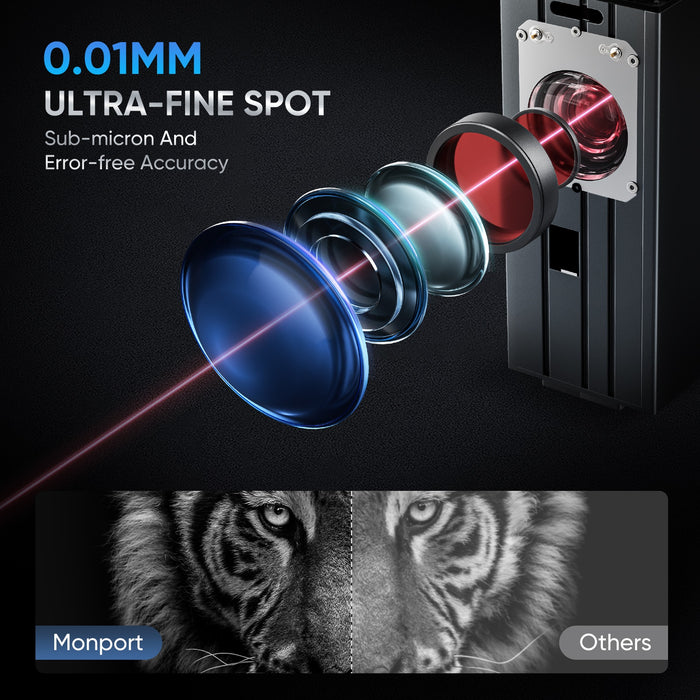
Now let’s talk depth.
Deep engraving with a fiber laser mopa is about layering passes without overheating the material.
Technique for Deep Engraving
-
Use moderate power
-
Medium frequency
-
Multiple passes
-
Clean between layers
Your 50w fiber laser should not try to dig full depth in one go. That creates slag and rough walls.
With a good fiber laser mopa, you can balance pulse width and peak energy so each pass removes clean material.
Result?
• Crisp edges
• Minimal heat distortion
• Better detail retention
This is ideal for mould marking, industrial tags, or permanent serial plates.
Why Many Aussie Workshops Choose Monport
When it comes to reliable machines, Monport is becoming popular across small Australian fabrication shops.
Let’s compare two models clearly.
Monport GQ 50W vs GA 60W MOPA
| Feature |
|
|
|---|---|---|
| Laser Type | Standard Fiber | Fiber Laser MOPA |
| Power | 50W | 60W |
| Working Area | 7.9" x 7.9" | 6.9" x 6.9" |
| Focus | Manual | Auto + Manual |
| Pulse Control | Limited | Wide 1–3000kHz |
| Colour Marking | Basic Black | Full Stainless Colour |
| Speed | Fast | Up to 15000mm/s |
| Installation | Pre-assembled | One-minute setup |
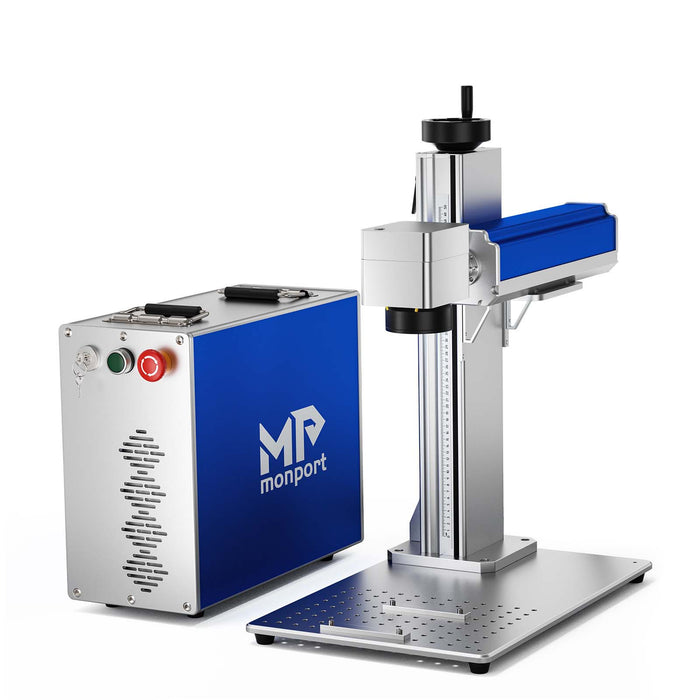
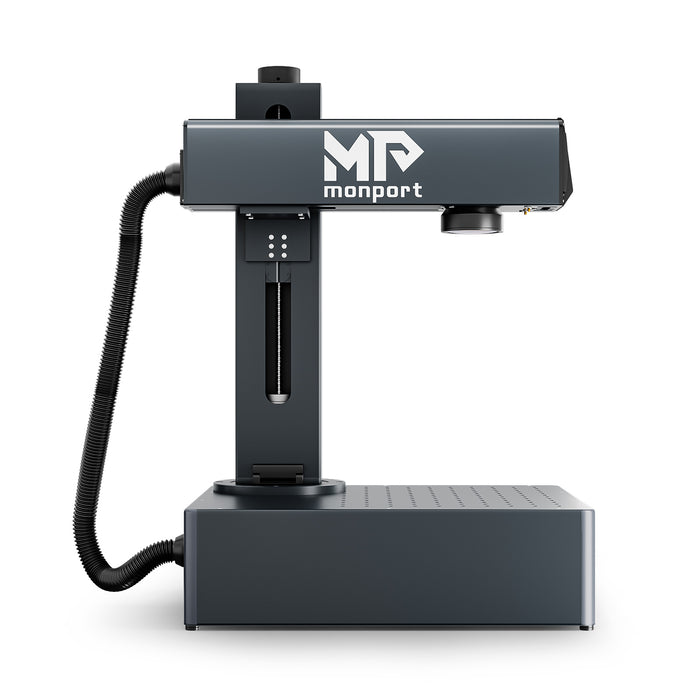
Why GQ 50W Is Solid
The GQ is a strong 50w fiber laser for standard engraving.
It offers:
• Sino-Galvo control
• 100,000-hour source life
• Emergency stop button
• Portable desktop size
• Manual focus with ruler
• Optional rotary support
For black marking and deep engraving, it’s reliable.
Why GA 60W MOPA Steps Ahead
If colour is your goal, the fiber laser mopa GA 60W gives wider frequency and pulse width adjustment.
Key benefits:
• Auto-focus (±1mm accuracy)
• Integrated aluminium body
• ±90° adjustable vertical arm
• Pulse width 2–500ns
• Frequency up to 3000kHz
• Colour marking capability
A 50w fiber laser handles most industrial jobs. But if you want creative flexibility, MOPA wins.
Shop Now and upgrade your workshop with blog code AUBLOG888 before stock runs low.
Maintenance Tips for Long-Term Performance

Your fiber laser mopa can last up to 100,000 hours, but only if maintained properly.
Keep it simple:
• Clean lens weekly
• Check focus calibration
• Avoid dusty environments
• Don’t overdrive power constantly
A 50w fiber laser running at max power daily shortens lifespan. Balance your settings.
Also use the red dot locator to confirm alignment before starting large batches.
Key Takeaways
• A fiber laser mopa gives full pulse width and frequency control
• A 50w fiber laser is strong for standard marking and deep engraving
• Colour marking needs precise heat management
• Deep engraving requires layered passes
• Monport GQ 50W suits industrial marking
• Monport GA 60W MOPA excels in colour and precision
FAQs
1. Can a 50w fiber laser do colour marking?
A standard 50w fiber laser can produce black marking well. For consistent stainless colour effects, a fiber laser mopa is recommended.
2. Is MOPA better for deep engraving?
Yes, because a fiber laser mopa allows better pulse control, which helps manage heat and depth more cleanly.
3. How long does a fiber laser mopa last?
Most systems, including a 50w fiber laser source, are rated around 100,000 hours depending on usage.
4. Do I need auto-focus?
Not required, but auto-focus saves time and improves consistency, especially for batch production.
5. What metals can a 50w fiber laser engrave?
Stainless steel, gold, silver, brass, aluminium, and many coated metals can be marked or engraved effectively.
Discover More, expand your marking capability, and don’t forget to apply AUBLOG888 at checkout.
Conclusion
Mastering a fiber laser mopa isn’t about guessing settings. It’s about understanding pulse width, frequency, and heat control. A well-tuned 50w fiber laser can produce strong black marks and deep engravings that last decades. But when colour and fine detail matter, a MOPA system offers more flexibility and better repeat results. For Australian workshops looking to expand services, upgrading your fiber laser mopa setup can mean higher-value jobs and more creative work.
If you’re ready to level up your 50w fiber laser capability, Shop Now and use blog code AUBLOG888 for exclusive discounts.
Blog Code: AUBLOG888


Leave a comment